Dopamine Nation: The Science of Motivation and Addiction
The Invisible Puppeteer
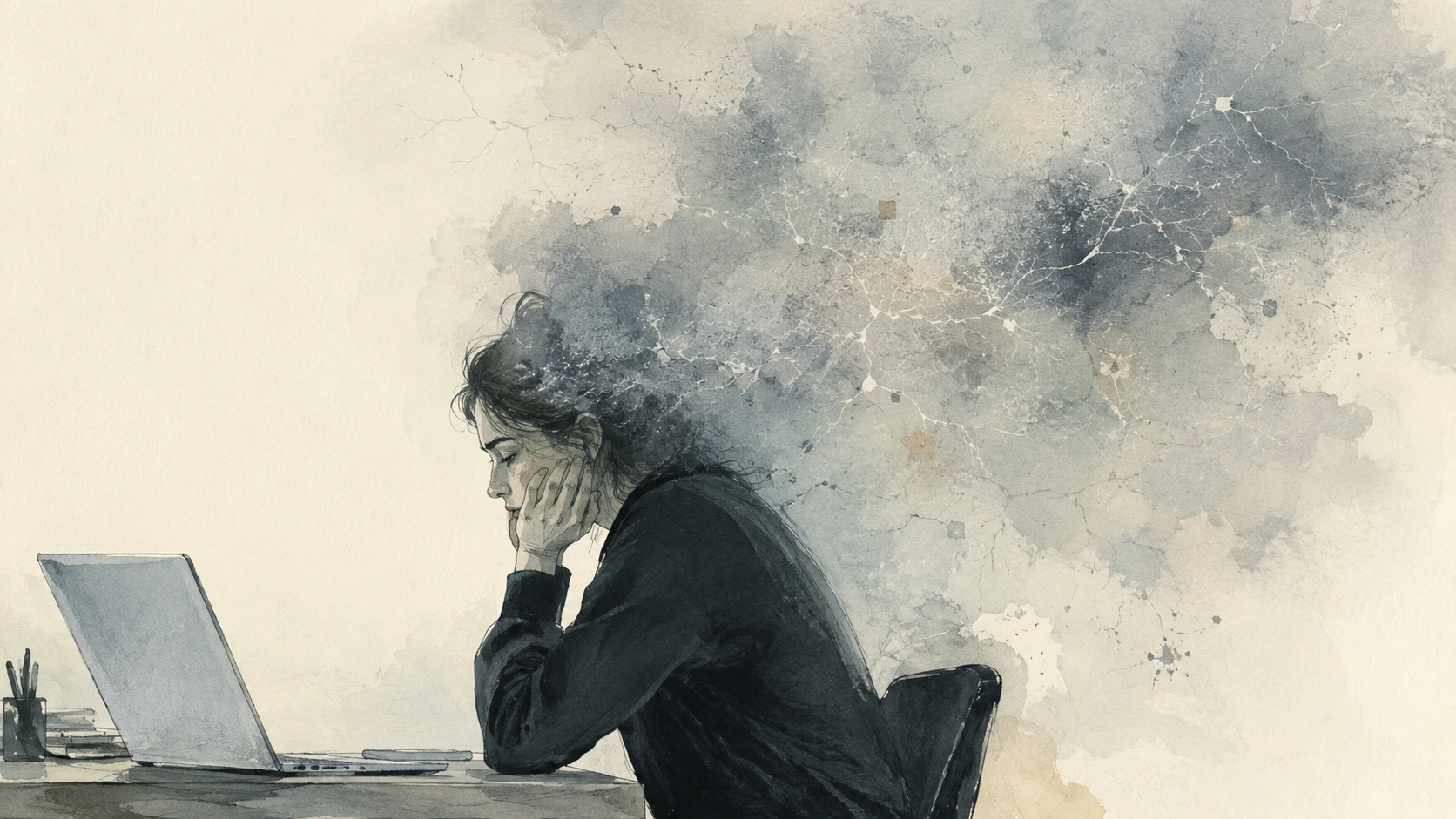
You pick up your phone. Just for a second. You swear it.
Fifteen minutes vanish. Maybe thirty. You're scrolling through short videos you don't even enjoy anymore. Your thumb moves on autopilot. You feel a vague emptiness, but you keep going.
Sound familiar?
Here's the uncomfortable question: Is that weak willpower? Are you just lazy? Undisciplined?
No. You're not broken. You're being controlled by a molecule so small you can't see it, yet so powerful it shapes your entire day. Every scroll, every snack, every "just one more episode" decision traces back to it.
Its name is dopamine. And understanding how it works might be the most important thing you learn about yourself this year.
Not What You Think
Let's clear something up immediately.
Most people think dopamine is the "pleasure chemical." You hear it everywhere. Articles, podcasts, YouTube videos. They all say the same thing: dopamine equals happiness.
Wrong.
Dopamine is not about liking something. It's about wanting it. There's a massive difference. Think about it. Have you ever craved a piece of chocolate cake, built it up in your mind, imagined how incredible it would taste? Then you took a bite. The first bite was good. The second was fine. By the fourth, you barely tasted it anymore. The wanting was far more intense than the having.
That's dopamine. It doesn't give you satisfaction. It gives you anticipation. It's the molecule of "more." Not the joy of opening a gift, but the excitement of staring at the wrapped box wondering what's inside.
Once you grasp this distinction, your entire behavior starts making sense.
An Accidental Discovery
For a long time, nobody knew dopamine existed. Then, in the 1950s, a Swedish scientist named Arvid Carlsson made a discovery that would eventually win him a Nobel Prize. But back then? Nobody believed him.
Carlsson found dopamine in the brain and proposed it wasn't just a useless byproduct, as everyone assumed. He argued it was a neurotransmitter — a chemical messenger that neurons use to communicate. The scientific community laughed. The prevailing belief was that dopamine was merely a stepping stone, a precursor to other chemicals like adrenaline. The idea that it had a job of its own seemed absurd.
Carlsson kept working. He discovered that rabbits with depleted dopamine couldn't move normally. When he restored it, they sprang back to life. This led to a breakthrough in understanding Parkinson's disease, which we now know is caused by the death of dopamine-producing cells in a specific brain region.
Parkinson's patients showed the world what happens when dopamine disappears. Movement freezes. Motivation dies. The will to do anything vanishes.
Dopamine, it turned out, wasn't optional. It was the engine of action itself.
The Reward Circuit
So how does this engine actually work?
Deep inside your brain, there's a small but mighty structure called the Ventral Tegmental Area, or VTA. Think of it as dopamine's headquarters. When something good happens, or even when something good might happen, the VTA fires dopamine to another region called the Nucleus Accumbens.
This pathway is your reward circuit. And it's ancient. Millions of years old.
Here's where it gets interesting. The dopamine spike doesn't happen when you receive the reward. It happens when you anticipate it. The bigger the uncertainty, the bigger the spike.
This is why gambling is so addictive. A guaranteed win is boring. But a maybe win? That's rocket fuel for your dopamine system. Your brain doesn't just want rewards. It wants surprises. It craves unpredictability.
Ever wonder why you can't stop checking for new notifications? Each check is a tiny gamble. Maybe something exciting is there. Maybe not. That uncertainty keeps you pulling the lever.
The Modern Hijacking
Now here's the problem.
Your dopamine system evolved in a world of scarcity. For most of human history, food was hard to find. Sugar was rare. Information was limited. Social approval could mean survival. In that world, a dopamine system that screamed "More!" was a survival advantage.
But you don't live in that world anymore.
You live in an era of unlimited abundance. Junk food engineered in laboratories to hit maximum dopamine response. Social media platforms designed by teams of psychologists to keep you scrolling. Streaming services that auto-play the next episode before you even decide. Pornography, video games, online shopping, all available 24/7 with zero effort.
Your brain is running ancient hardware in a modern software environment. The system that once helped your ancestors find food and stay alive is now being hijacked by entities that have studied it more carefully than you ever will.
You're not fighting your phone. You're fighting billion-dollar algorithms designed to exploit a molecule that's older than humanity itself.
The Tolerance Trap
Here's what happens when dopamine fires too often.
Your brain is smart. It wants balance. When a signal gets too loud, it turns down the volume. This is called downregulation. The brain reduces its dopamine receptors to protect itself from overstimulation.
Think of it like entering a loud concert. At first, the music is deafening. After an hour, your ears adjust. It feels normal. You've adapted.
But then you walk outside. The quiet street feels too quiet. Eerily silent. That's what happens to your brain when you've been flooding it with cheap dopamine all day. Real life feels boring. A walk in nature feels pointless. A conversation feels slow. Reading a book feels like torture.
Anna Lembki, a Stanford psychiatrist and author of Dopamine Nation, describes this beautifully. She says pleasure and pain are processed in the same brain region, like a balance scale. Tip it toward pleasure, and the brain eventually adds weight to the pain side to level things out. That's the comedown. The emptiness. The craving for another hit.
The more you stimulate, the higher your tolerance climbs. And the harder it becomes to feel anything at all.
Breaking the Loop
So what do you do? Throw your phone in a lake? Move to a cabin in the woods?
Tempting. But unrealistic.
The popular term right now is "dopamine detox." The idea sounds good. Stop all pleasurable activities for a while and reset your brain. But scientifically, that's not quite how it works. You can't detox from a neurotransmitter your body needs to function. Without dopamine, you'd literally couldn't move.
What you can do is something more practical.
Embrace boredom. Seriously. Boredom isn't the enemy. It's the space where your brain recalibrates. When you stop flooding it with stimulation, those downregulated receptors slowly recover. The volume comes back up. Simple things start feeling good again.
Add friction. Want to scroll less? Put your phone in another room. Delete the apps you lose hours to. Make the unhealthy choice harder and the healthy choice easier. Your brain is lazy. It follows the path of least resistance. Change the path, and you change the behavior.
Delay the reward. When you feel the urge to check your phone, wait ten minutes. The craving will peak and then fade. Dopamine demands immediacy. Deny it that, and it loses much of its power.
The Chemical of "More"
Here's the truth nobody tells you.
Dopamine isn't your enemy. It's the reason you get out of bed in the morning. It's the reason you chase goals, fall in love, build things, dream. Every great human achievement has dopamine written all over it. Without it, we'd still be sitting in caves, staring at walls.
The problem was never the molecule. The problem is what we've done to it. We've handed it over to machines. To algorithms. To foods engineered in labs. To platforms that profit from our exhaustion.
But here's the good news. Now you know.
You know why you can't stop scrolling. You know why the cake never satisfies. You know why real life feels dull after hours of stimulation. It's not character failure. It's chemistry. And chemistry, once understood, can be managed.
Dopamine is the chemical of "more." Always has been. The question is: more of what?
That part is up to you.
If this article helped you understand your brain a little better, share it with someone who keeps saying "I just can't stop scrolling." They're not weak. They're just human.