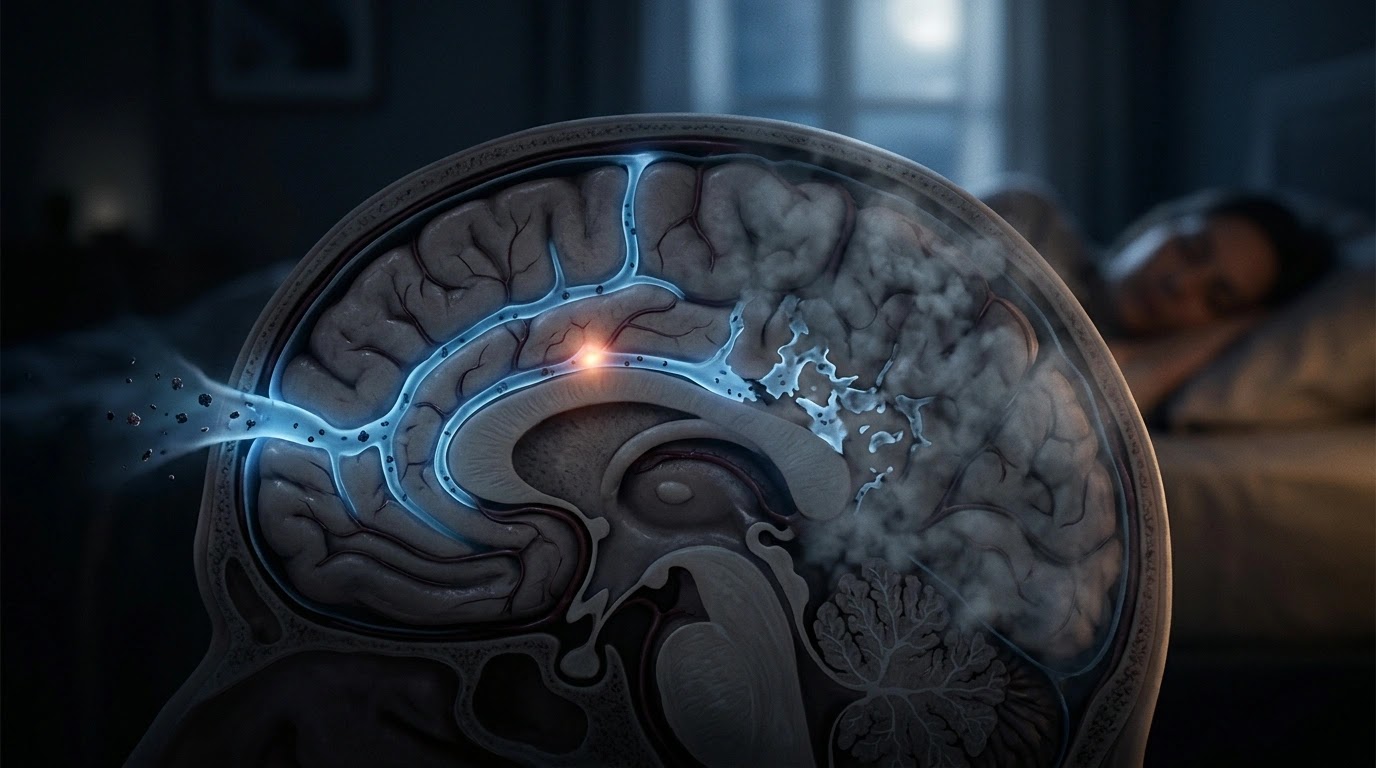
The Biology of Phantom Dread: How Interoceptive Prediction Errors Fabricate Visceral Anxiety
You are sitting at your desk finishing a routine task, or perhaps you wake up at 3:15 AM in a silent room. Out of nowhere, a wave of cold catastrophe washes over your chest. Your heart accelerates, your throat tightens, and an unmistakable conviction takes hold: something catastrophic is happening right now, or is about to.
You scan your life for the cause. Did you miss a critical deadline? Did someone die? Is your health failing?
There is no bad news, no threat, and no preceding worry. Yet the visceral terror is unmistakable.
In clinical psychiatry, this experience is often categorized as an idiopathic panic attack, nocturnal panic, or a spike of Generalized Anxiety Disorder (GAD). Patients are routinely referred to Cognitive Behavioral Therapy (CBT), where they are instructed to trace the "distorted thoughts" that provoked the panic.
That approach frequently stalls or backfires. When an attack has no psychological origin, forcing a patient to hunt for irrational thoughts makes them invent narratives to explain a purely biological alarm.
This phenomenon is phantom dread. It does not start in the cognitive mind or the external environment. It originates below the diaphragm, driven by an uncoupling between the stomach’s electrical pacemaker, the vagus nerve, and the brain’s predictive interoceptive machinery.
The Stomach’s 24/7 Metronome: The Interstitial Cells of Cajal
The human stomach is not a passive muscular sac that switches on only when food arrives. It is an autonomous bioelectric oscillator that runs continuously from gestation until death.
Embedded between the circular and longitudinal muscle layers of the gastric wall—within the myenteric plexus—lies a specialized network of non-neuronal pacemaker cells called the Interstitial Cells of Cajal (ICC).
GASTRIC BASAL ELECTRICAL RHYTHM
Normal Pacing (Normogastria): ~0.05 Hz (~3 cycles per minute)
┌───┐             ┌───┐             ┌───┐
│   │             │   │             │   │
│   │             │   │             │   │
┘   └─────────────┘   └─────────────┘   └─────────────
0s               20s               40s               60s
These cells spontaneously generate an infra-slow electrical slow wave known as the gastric basal electrical rhythm.
-
It operates at approximately 0.05 Hz, which translates to 3 cycles per minute (cpm) (normal physiological range: 0.033 to 0.058 Hz).
-
Unlike myocardial pacemakers, which beat at roughly 1 Hz (60–80 beats per minute) to pump blood, the 0.05 Hz gastric wave serves an entirely different purpose during fasting: it acts as an ongoing homeostatic clock and baseline neural anchor for the central nervous system.
Subclinical Gastric Dysrhythmias
This 0.05 Hz rhythm can easily slip out of sync. Under conditions of localized mucosal irritation, subclinical histamine release, transient shifts in autonomic tone, nocturnal blood glucose drops, or micro-reflux, the electrical pacing destabilizes:
-
Tachygastria: Pacing accelerates into an erratic 3.7 to 9.0 cpm (>0.06 Hz).
-
Bradygastria: Pacing drops below 2.4 cpm (<0.04 Hz).
Crucially, these shifts rarely trigger nausea, indigestion, or abdominal pain. Mechanoreceptors and enteric interneurons pick up the aberrant electrical cadence without activating nociceptive (pain) pathways. To your conscious awareness, your stomach feels entirely normal. To your brainstem, however, an essential internal life-support metric has drifted off-frequency.
The Ascending Highway: How the Gut Talks to the Cortex
The brain is informed of this rhythm through an anatomically dedicated, hard-wired sensory highway. Roughly 80% to 90% of the fibers in the vagus nerve (Cranial Nerve X) are sensory afferents, primarily unmyelinated C-fibers and thinly myelinated Aδ-fibers whose job is to transmit raw physiological telemetry from the viscera upward to the brainstem.
THE ASCENDING VISCEROSENSORY AXIS

 [ Gastric Interstitial Cells of Cajal & Mechanoreceptors ]
                            │
                            ▼ (CN X: 80-90% Afferent C & Aδ Fibers)
                  [ Nodose Ganglion ]
                            │
                            ▼
          [ Nucleus of the Solitary Tract (NTS) ]
                   (Primary Sensory Gate)
                            │
                            ▼
               [ Parabrachial Nucleus (PBN) ]
               /                            \
              /                              \
    (Subcortical Alarm)             (Cortical Interoceptive Relay)
             ▼                                      ▼
[ Central Amygdala / BNST ]        [ Thalamus: VPMpc Nucleus ]
                                                    │
                                                    ▼
                                       [ Posterior Insula (Granular) ]
                                          (Primary Sensory Mapping)
                                                    │
                                                    ▼
                                         [ Mid-Insula (Dysgranular) ]
                                          (Multimodal Integration)
                                                    │
                                                    ▼
                                      [ Dorsal Anterior Insula (dAI) ]
                                         (Comparator & Error Engine)
The transmission steps follow a strict pathway:
-
The Nodose Ganglion: Sensory cell bodies outside the brainstem gather vagal afferent information from the stomach wall.
-
Nucleus of the Solitary Tract (NTS): Located in the medulla oblongata, the NTS acts as the master sensory clearinghouse for all visceral signals.
-
Parabrachial Nucleus (PBN): Positioned in the dorsal pons, the PBN splits the ascending signal into two distinct functional channels:
-
The Subcortical Limbic Route: Projects directly to the Central Nucleus of the Amygdala and the Bed Nucleus of the Stria Terminalis (BNST), priming survival reflexes without needing cortical permission.
-
The Thalamocortical Route: Relays through the parvocellular part of the ventral posteromedial nucleus of the thalamus (VPMpc) directly toward the insular cortex.
-
-
The Insular Progression: The visceral signal arrives at the posterior insula (which constructs an unadorned sensory map of the body, much like S1 maps touch). It passes into the mid-insula to integrate with other sensory inputs, and ultimately reaches the dorsal anterior insular cortex (dAI)—the command center for conscious interoceptive awareness and bodily feeling.
The Discovery of the Gastric-Brain Resting Network
Until recently, neuroscientists assumed that visceral organs communicated with the brain purely on demand—sending signals only during hunger, fullness, pain, or distress.
Landmark research led by neuroscientist Catherine Tallon-Baudry and Ignacio Rebollo at INSERM and the École Normale Supérieure upended this assumption:
-
Spontaneous Brain-Gut Coupling (Rebollo et al., 2018): Measuring brain activity via resting-state fMRI alongside electrogastrography (EGG) revealed that spontaneous, resting fluctuations in widespread cortical networks are phase-synchronized with the stomach's 0.05 Hz rhythm.
-
Phase-Amplitude Coupling (Richter et al., 2017): The phase of the stomach's infra-slow 0.05 Hz electrical rhythm directly modulates the amplitude of cortical alpha oscillations (8–12 Hz) across sensorimotor and parieto-occipital areas.
-
Broad Metronome Function (Rebollo & Tallon-Baudry, 2022): Gastric-brain coupling is not confined to autonomic centers; it influences sensory, motor, and transmodal cognitive networks.
Your stomach acts as an internal, infra-slow conductor. Its 0.05 Hz slow wave establishes a rhythmic baseline upon which cortical communication is structured.
Recent work (Banellis, Rebollo, Allen et al.) demonstrates that when this gastric rhythm uncouples from cortical resting-state networks, the breakdown correlates directly with sudden spikes in dimensional anxiety, altered mind-wandering, and traits of neuroticism.
Predictive Coding: When the Insular Comparator Panics
To understand why a rhythm shift in the stomach becomes an experience of existential terror, we have to look through the lens of computational psychiatry and the predictive processing framework developed by researchers like Karl Friston, Anil Seth, and Hugo Critchley.
The brain does not passively take in sensory information from the body and react to it. Instead, the brain is an active inference engine. It maintains top-down generative models (priors) that predict what internal physiological metrics ought to be from second to second.
       THE INTEROCEPTIVE PREDICTIVE CODING LOOP

Top-Down Generative Prior             Ascending Visceral Telemetry
(dAI Model: "Pacing is 0.05 Hz")      (Vagal Input: 0.08 Hz Tachygastria)
             \                                      /
              \                                    /
               ▼                                  ▼
      ┌────────────────────────────────────────────────────┐
      │        Dorsal Anterior Insular Cortex (dAI)        │
      │                     COMPARATOR                     │
      └────────────────────────────────────────────────────┘
                                │
                                ▼
                 Interoceptive Prediction Error
               [ IPE = Afferent Input - Prior ]
                                │
               ┌────────────────┴────────────────┐
               ▼                                 ▼
       Active Inference                 Error Inflation
     (Cannot consciously force        (Precision weighting high;
      stomach to reset phase)          cortex cannot suppress it)
                                                 │
                                                 ▼
                                        Systemic Panic Alarm
The mathematical foundation of this process is simple:
$$\text{Interoceptive Prediction Error (IPE)} = \text{Ascending Visceral Afferent Input} - \text{Top-Down Generative Prior}$$
The dorsal anterior insula (dAI) acts as the comparator. It measures the difference between what the brain predicted would happen physiologically and what the vagal afferents report is actually happening.
How Precision Weighting Inflates the Error
Under normal conditions, the ICC beats at its steady 0.05 Hz rhythm. The dAI expects this exact rhythm; afferent input matches the generative prior. The prediction error is near zero, precision weighting on that channel stays low, and the signaling remains entirely unconscious. You feel fine.
Now consider what happens during an abrupt subclinical gastric dysrhythmia:
-
The ICC pacemaker slips into transient tachygastria (e.g., 0.08 Hz).
-
The vagus nerve carries altered, erratic bursts of action potentials through the NTS and PBN into the thalamocortical path.
-
The incoming pattern clashes violently with the dAI's internal prediction.
-
The dAI registers a high-magnitude Interoceptive Prediction Error.
Normally, the brain resolves prediction errors through active inference—it initiates a motor action to bring reality back into alignment with its prediction. If you are cold, you shiver or put on a jacket. If you are thirsty, you drink.
You cannot consciously flex or relax your stomach wall to force an ICC pacemaker to reset its phase.
Active inference fails. The dAI cannot resolve the error through motor output, nor can it simply discard the signal; the autonomic nervous system weights visceral mismatch with high survival priority. The prediction error cascades upward, unbuffered and uncorrected.
Somatovisceral Confabulation: How Visceral Mismatch Becomes "Doom"
Why does this prediction error feel like existential dread rather than a localized stomachache?
The answer lies in how visceral sensation is processed. Unlike the skin, which is mapped with pin-point spatial accuracy on the somatosensory cortex, visceral mechanosensation along the vagal axis carries low spatial resolution. It is processed in the insula not as a localized physical touch, but as affective valence—a direct shift in how safe, grounded, or threatened you feel.
When a massive Interoceptive Prediction Error reaches the conscious cortex, a five-stage cognitive-emotional cascade unfolds:
THE PHANTOM DREAD CASCADE
┌────────────────────────────────────────────────────────────────────────┐
│ 1. PERIPHERAL TRIGGER                                                  │
│    Silent, painless ICC dysrhythmia shifts gastric pacing off 0.05 Hz. │
├────────────────────────────────────────────────────────────────────────┤
│ 2. AFFERENT ESCALATION                                                 │
│    Vagal afferents signal through NTS and PBN, waking limbic relays.   │
├────────────────────────────────────────────────────────────────────────┤
│ 3. INSULAR ALARM                                                       │
│    The dAI detects an unresolvable error: a core baseline has broken.  │
├────────────────────────────────────────────────────────────────────────┤
│ 4. EXTEROCEPTIVE DISCORDANCE                                           │
│    Cortical networks check vision and hearing: the environment is safe.│
├────────────────────────────────────────────────────────────────────────┤
│ 5. SOMATOVISCERAL CONFABULATION                                        │
│    Higher brain regions (DLPFC, DMN) bridge the gap:                   │
│    "My body registers catastrophe, but my room is empty. Therefore,    │
│     something unseen, terrible, and imminent is coming."               │
└────────────────────────────────────────────────────────────────────────┘
The higher association regions—the dorsolateral prefrontal cortex (DLPFC), the ventromedial prefrontal cortex (vmPFC), and the default mode network (DMN)—are narrative engines. Their job is to make sense of your physiological state relative to your environment.
When the insula sounds a systemic physiological alarm, but the eyes and ears report a quiet, safe bedroom, the brain faces a cognitive paradox: My body registers catastrophic threat, but there is nothing around me to explain it.
To bridge this gap, the narrative cortex does what it always does: it confabulates. It invents an explanation after the fact:
-
"I must be on the verge of a heart attack."
-
"My life is falling apart."
-
"Something terrible is about to happen to my family."
The raw, physical prediction error of a misfiring gastric pacemaker is transformed into psychological dread.
Breaking the Loop: Bottom-Up Strategic Interventions
Understanding this gut-brain axis makes clear why conventional cognitive reappraisal often fails during these episodes. Attempting to calm bottom-up phantom dread by analyzing your thoughts is like trying to fix an engine knock by repainting the speedometer. The cognitive distortions are consequences of the biological alarm, not its cause.
Effective intervention requires a biological, bottom-up approach that re-regulates the ascending neural axis.
1. Disrupt the Ascending Alarm with the Physiological Sigh
You cannot consciously control your stomach's pacemakers, but you can directly control the motor nucleus that modulates vagal traffic: the respiratory center.
The physiological sigh leverages respiratory sinus arrhythmia to recalibrate autonomic signaling:
-
Inhale deeply through the nose until the lungs are nearly full.
-
Take a sharp, immediate second inhale to fully expand the alveoli.
-
Exhale slowly through gently pursed lips for six to eight seconds.
THE PHYSIOLOGICAL SIGH
Inhale 1 (Deep)      Inhale 2 (Top-off)     Exhale (Slow, Extended)
┌────────────────┐   ┌──────┐              ┌────────────────────────────────┐
│                │   │      │              │                                │
│                └───┘      └──────────────┘                                └──────
0s               3s   3.5s   4.5s          5s                               12s
The extended exhalation increases intrathoracic pressure, activating baroreceptors that signal the brainstem to slow the heart rate. This burst of parasympathetic activation dampens transmission through the Nucleus of the Solitary Tract (NTS) and Parabrachial Nucleus (PBN), cutting off the erratic visceral signal before it reaches the insular comparator.
2. Safeguard Circadian Gastric Pacing
Because the ICC network is vulnerable to shifts in metabolic state and autonomic balance, simple behavioral adjustments can prevent nocturnal dysrhythmias:
-
The Three-Hour Buffer: Avoid consuming large, calorically dense, or high-glycemic meals within three hours of sleep. As you transition into deeper sleep stages, gastrointestinal motility naturally slows. Late-night digestion forces the stomach into conflicting autonomic states, increasing the likelihood of nocturnal tachygastria that triggers 3:00 AM awakenings with panic.
-
Watch Transient Blood Glucose Drops: Nocturnal hypoglycemia causes a compensatory surge of counter-regulatory hormones (epinephrine and glucagon). This sudden adrenaline spike destabilizes the ICC 0.05 Hz rhythm while directly priming the central amygdala.
3. Cognitive De-Confabulation (Intercepting the Story)
When sudden, free-floating dread hits without an obvious external trigger, change your internal question.
Instead of asking, "What am I worried about?" ask:
"What is my visceral prediction engine misreading right now?"
Simply recognizing the feeling as a physical telemetry glitch stops the prefrontal cortex from manufacturing an existential crisis. When you identify the dread as an interoceptive mismatch rather than genuine danger, you starve the anxiety loop of the psychological panic that sustains it.
Frequently Asked Questions
Can you experience gastric dysrhythmia without any digestive symptoms?
Yes. Gastric dysrhythmia refers strictly to the disruption of the infra-slow electrical slow waves (0.05 Hz) generated by the Interstitial Cells of Cajal. Unless this electrical irregularity produces severe mechanical spasms, delayed gastric emptying, or acid backwash, nociceptive (pain) pathways remain quiet. The signal travels along sensory vagal afferents, altering your emotional baseline without causing stomach pain, heartburn, or nausea.
How does phantom dread differ from a classic panic attack?
A classic panic attack typically involves an escalating, identifiable feedback loop: an initial perceived stressor or light somatic sensation triggers catastrophic thoughts, which fuel a sympathetic adrenaline spike that compounds the physical distress. Phantom dread operates purely in reverse: an unperceived visceral rhythm mismatch creates an immediate, high-amplitude prediction error in the brain, presenting as a fully formed sense of terror before any conscious thought occurs.
Why do nocturnal panic attacks happen so often between 2:00 AM and 4:00 AM?
The early morning hours coincide with several physiological shifts: circadian dips in core body temperature, transitions between deep slow-wave sleep and REM sleep, naturally low nocturnal cortisol, and prolonged fasting. If a transient dip in blood sugar or silent digestive reflux destabilizes the stomach's electrical pacing during this window, the resulting interoceptive mismatch abruptly jolts the brain into wakefulness with an immediate, unanchored sensation of catastrophe.