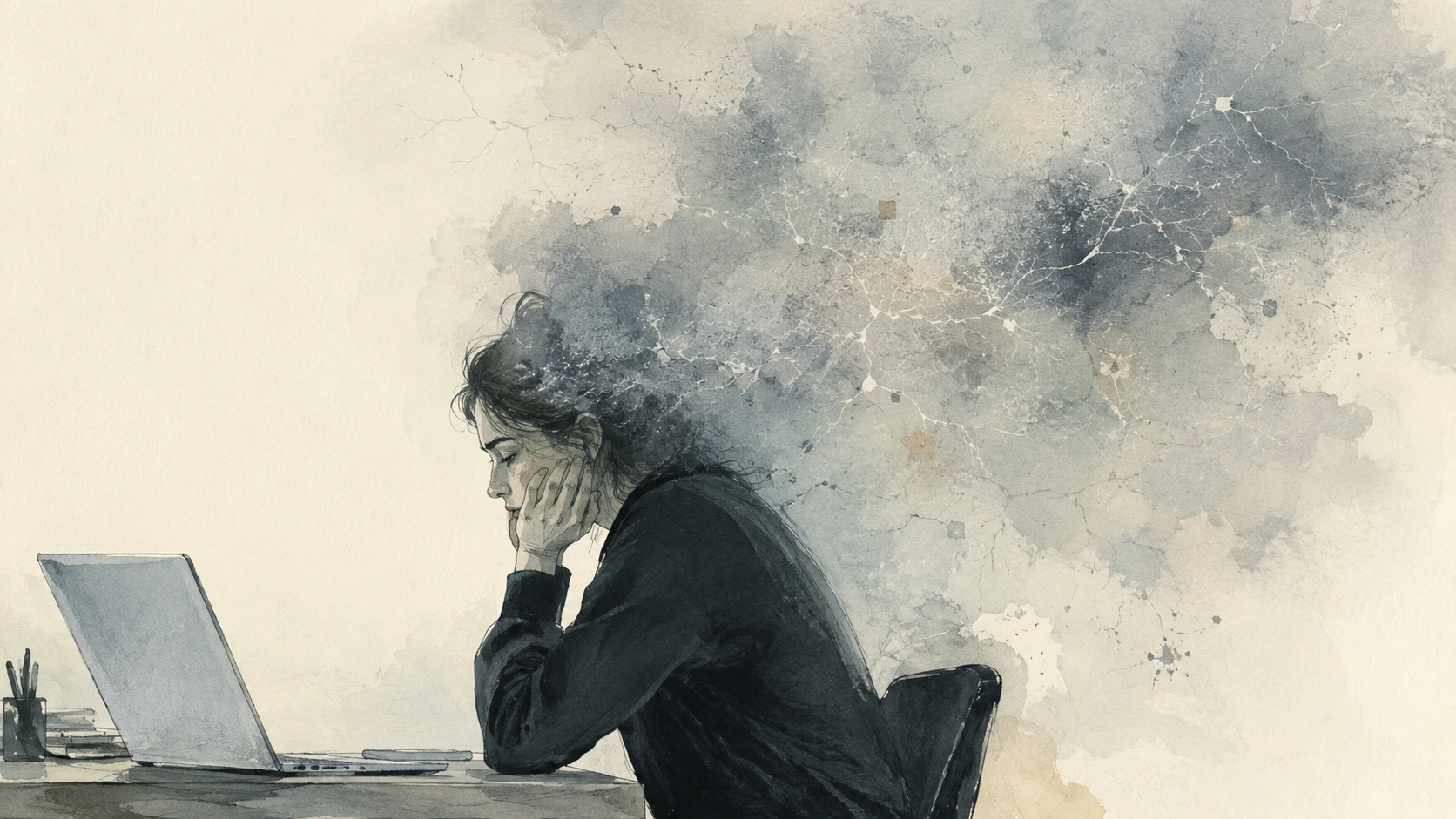
For the entire span of human history, the human skull has functioned as an absolute boundary. Within its bone enclosure lies the only true private space a person possesses: the internal narrative of memory, silent doubt, unspoken fear, and unformed desire. You could be imprisoned, tortured, or coerced, but your inner monologue remained strictly your own. It was the ultimate sanctuary—a domain where thought existed prior to public display.
That biological guarantee is quietly dissolving.
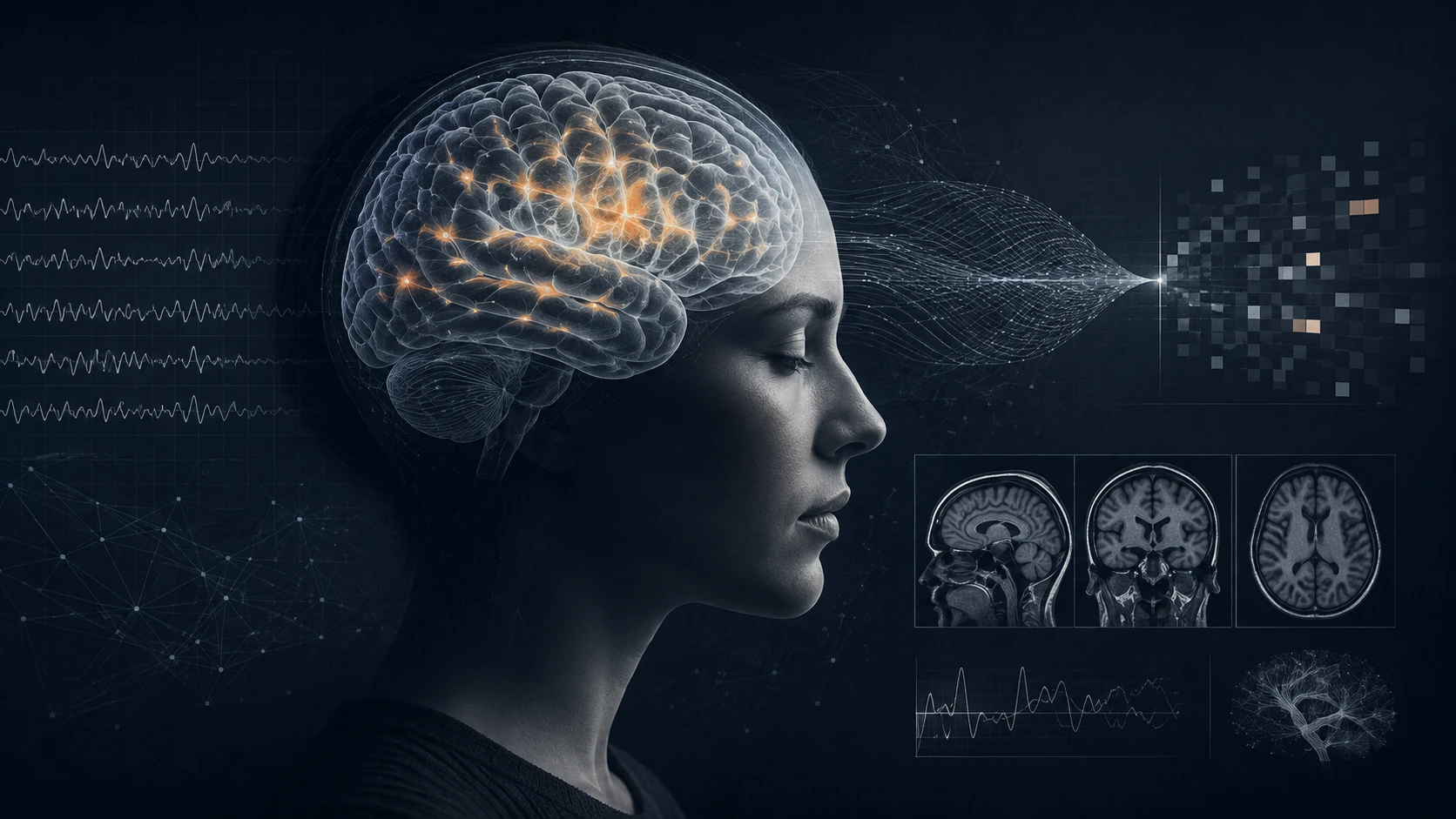
Over the past few years, the convergence of high-resolution neuroimaging and generative artificial intelligence has achieved what was long considered science fiction: the translation of raw brain activity into human language and visual images. We are not merely measuring heart rates or detecting broad emotional arousal. We are beginning to decode the semantic and visual content of the human mind.
This technological leap promises unprecedented restoration for individuals who have lost the ability to speak or move. Yet, as the boundary between brain and machine grows porous, it raises a profound philosophical challenge. When our unspoken thoughts can be reconstructed as digital data, what becomes of human autonomy, mental privacy, and the freedom to think without an audience?
From Neural Signals to Meaning
To understand how thought becomes readable, one must first dismantle a common misconception. Modern neural decoding does not work like a magical telepathic microphone picking up a faint voice in the brain. Instead, it operates as a sophisticated translation layer between biological signals and statistical patterns.
When you listen to a story, imagine a face, or silently rehearse a sentence, thousands of neurons fire in complex, distributed networks across your cerebral cortex. This neural activity alters local blood oxygen levels, creating subtle, dynamic patterns. High-field functional Magnetic Resonance Imaging (fMRI) scanners can capture these changes voxel by voxel—the three-dimensional pixels of neuroimaging.
In isolation, these noisy blood-flow patterns are nearly impossible for a human observer to interpret. This is where modern generative AI enters the equation.
Researchers at the University of Texas at Austin, led by neuroscientist Alexander Huth and computer scientist Jerry Tang, demonstrated this synergy by pairing fMRI scanners with transformer-based neural network language models. By recording a subject’s brain activity for hours while they listened to podcasts, the AI learned to associate specific patterns of brain activation with specific semantic meanings.
When the subject was later placed back in the scanner and asked to listen to a completely new story—or merely imagine telling one—the decoder could generate a continuous stream of text that captured the gist of their silent thoughts. If a participant thought, "I don't have my driver's license yet," the decoder reconstructed the semantic essence: "She has not even started to learn to drive."
Simultaneously, researchers at Osaka University and other institutions demonstrated that latent diffusion models—the technology powering AI image generators like Stable Diffusion—could reconstruct natural images viewed by human subjects directly from their visual cortex fMRI data. The reconstructed images contained striking structural and conceptual fidelity, turning neural signals back into visual reality.
[ Mental Activity ] ──> [ fMRI Blood-Oxygen Signal ] ──> [ AI Decoding Model ] ──> [ Text / Image Reconstruction ]
The Guardrails of Current Technology
The reality of neural decoding is both extraordinary and constrained. It is essential to distinguish between demonstrated scientific capability and speculative panic.
Current non-invasive brain decoding cannot be deployed secretly or at a distance. Systems like the UT Austin semantic decoder require the subject to lie motionless inside a multi-million-dollar fMRI machine for dozens of hours to build a custom baseline model. A decoder trained on one person's brain activity produces gibberish when applied to another person's neural data.
Furthermore, the decoding process requires active cognitive cooperation. In tests where subjects fought the decoder by mentally counting by sevens or imagining unrelated animals while listening to a story, the system failed to extract coherent thoughts.
Yet, relying on current physical limitations as a permanent ethical safeguard is short-sighted.
Neurotechnology is rapidly moving out of bulky fMRI tubes and into portable, consumer-grade wearables. Functional near-infrared spectroscopy (fNIRS) and high-density electroencephalography (EEG) headsets are becoming lighter, cheaper, and increasingly accurate. By the mid-2020s, consumer-grade EEG headsets were already being used outside clinical settings for meditation, focus training, and "productivity" tracking—a trend documented in peer-reviewed scoping reviews of consumer neurotechnology. As generative AI models grow more adept at translating sparse, noisy signals into rich semantic context, the barrier between voluntary cooperation and passive data harvesting will inevitably shrink.
The Dual-Use Dilemma: Restoration versus Intrusion
The ethical reality of neural decoding is complicated by its enormous potential for human good. Consider a person suffering from late-stage Amyotrophic Lateral Sclerosis (ALS), locked-in syndrome, or a severe brainstem stroke. They remain fully conscious, intellectually vibrant, yet completely isolated behind a paralyzed body.
For these individuals, a neural decoder is not a privacy threat; it is a long-lost voice restored. It provides a direct channel to express pain, communicate love, make medical choices, and engage with the world. Suppressing neurotechnological research out of fear for privacy would abandon millions of people to profound isolation.
                  ┌── Medical Restoration (Restoring speech, movement, autonomy)
Neurotechnology ──┤
                  └── Cognitive Vulnerability (Surveillance, data harvesting, behavioral loss)
However, the exact same neural data that empowers a patient can easily become a tool of subtle coercion in other settings.
In corporate environments, consumer brain-monitoring headbands marketed as tools for "focus optimization" can secretly measure emotional fatigue, distraction, or frustration. In legal contexts, the temptation to use neural decoders as infallible lie detectors in courtrooms or interrogations threatens the fundamental right against self-incrimination.
If a state or employer can demand access to your brain signals, the concept of internal dissent vanishes. The line between what you do and what you merely think begins to erode.
The Philosophy of Cognitive Liberty
This tension has prompted bioethicists, legal scholars, and philosophers to formulate a new human rights framework centered on cognitive liberty.
Prominent legal scholar Nita Farahany defines cognitive liberty as the right to self-determination over our brains and mental experiences. It encompasses two foundational pillars:
-
The freedom to alter or enhance one's own mental states voluntarily.
-
The absolute right to refuse unwanted intrusion into or manipulation of one's mind.
Cognitive liberty builds upon traditional concepts of freedom of thought. Historically, legal systems treated freedom of thought as an absolute, inviolable right simply because technology lacked the physical means to violate it. Constitutions protected freedom of speech and expression, assuming that raw thought was naturally protected by the laws of physics and biology.
Now that neural activity can be digitised, stored, analyzed, and monetized, "thought" can no longer be treated as an abstract, untouchable realm. It requires explicit legal protection.
Neuroscientist Rafael Yuste, co-founder of the Neurorights Foundation, argues that brain data is fundamentally different from any other form of personal data. Unlike your location history, internet search queries, or genetic sequence, neural data is the physical substrate of consciousness itself. If you lose control over your brain data, you lose control over the source of all identity, agency, and free choice.
This movement has already moved from academic debate to constitutional law. In October 2021, Chile became the first nation in the world to enact a constitutional reform—Law No. 21,383—explicitly protecting "brain data and mental integrity," creating a legal precedent that aims to treat neural data with protections comparable to those applied to organ donation. A dedicated implementing statute (Boletín 13.828-19) intended to regulate brain data and neurotechnology remains in the Chilean legislative process, while Chile's Supreme Court has begun to enforce the new protections directly in case law.
Since then, the principle has begun to scale internationally. In November 2025, the United Nations Educational, Scientific and Cultural Organization (UNESCO) adopted the first global Recommendation on the Ethics of Neurotechnology. The text, which took effect in late 2025, calls on member states to protect mental privacy and freedom of thought and to limit the commercial exploitation of brain data. In parallel, the European Union's AI Act, which became broadly applicable in August 2026, classifies AI systems that exploit subliminal manipulation or infer emotions in workplaces and educational institutions as prohibited practices—a category that captures many current and forthcoming neurotechnology applications. What began as a Chilean constitutional amendment is rapidly becoming an emerging global norm.
Redefining the Inner World
The debate surrounding neural decoding ultimately forces us to confront a deep philosophical paradox. Consciousness developed behind a wall of physical privacy. Our moral development as individuals relies heavily on the ability to test ideas internally, experience private doubts, process raw impulses, and reject them before acting.
If every fleeting thought leaves a readable, permanent digital trace, human behavior will inevitably shift toward radical self-censorship. The rich, messy internal workspace of the human mind could flatten under the weight of constant potential observation.
The path forward does not lie in halting neural research or denying its transformative medical promise. Rather, it requires establishing a clear society-wide boundary: the mind must remain an unassailable sanctuary.
Technology may grant us the ability to translate brainwaves into words and images, but society must decide that a person's inner thoughts belong uniquely and irrevocably to them. The ultimate measure of our maturity in the age of neurotechnology will not be how deeply we can peer into the human brain, but whether we possess the wisdom to preserve the sanctity of what we find within.
Sources
-
Tang, J., LeBel, A., Jain, S., & Huth, A. G. (2023). Semantic reconstruction of continuous language from non-invasive brain recordings. Nature Neuroscience. https://www.nature.com/articles/s41593-023-01304-9
-
Takagi, Y., & Nishimoto, S. (2023). High-resolution image reconstruction with latent diffusion models from human brain activity. Proceedings of the IEEE/CVF Conference on Computer Vision and Pattern Recognition (CVPR). https://cvpr.thecvf.com/virtual/2023/poster/21159
-
Ozcelik, F., & VanRullen, R. (2023). Brain-Diffuser: Natural scene reconstruction from fMRI signals using generative latent diffusion. Scientific Reports. https://www.nature.com/articles/s41598-023-42891-8
-
Angrick, M., et al. (2024). Online speech synthesis using a chronically implanted brain–computer interface in an individual with ALS. Scientific Reports. https://www.nature.com/articles/s41598-024-60277-2
-
Sabio, J., et al. (2024). A scoping review on the use of consumer-grade EEG devices for research. PLOS ONE. https://pmc.ncbi.nlm.nih.gov/articles/PMC10917334/
-
Farahany, N. A. (2023). The Battle for Your Brain: Defending the Right to Think Freely in the Age of Neurotechnology. St. Martin's Press. ISBN 978-1250272959. https://us.macmillan.com/books/9781250272959/thebattleforyourbrain/
-
Neurorights Foundation — founded by R. Yuste et al. https://www.neurorightsfoundation.org/
-
Ruiz, S., Valera, L., Ramos, P., & Sitaram, R. (2024). Neurorights in the Constitution: from neurotechnology to ethics and politics. Philosophical Transactions of the Royal Society B, 379(1915), 20230098. https://pmc.ncbi.nlm.nih.gov/articles/PMC11491849/
-
UNESCO (2025, November). Recommendation on the Ethics of Neurotechnology. https://www.unesco.org/en/legal-affairs/recommendation-ethics-neurotechnology
-
European Commission. Regulatory Framework for AI (AI Act), Regulation (EU) 2024/1689. https://digital-strategy.ec.europa.eu/en/policies/regulatory-framework-ai